



Soundproofing home office spaces is now essential if you want to protect your focus, elevate your video call clarity, and minimize distractions—no matter where you work. Even though remote work usually brings a quieter environment than offices, ordinary household noise can still sabotage your productivity and the impression you make on meetings.
Key Takeaways
- Most soundproofing for home offices can be done without major construction or permanent changes, making it ideal for renters and small-space dwellers.
- Step-by-step sound dampening—door seals, rugs, curtains, and strategic furniture placement—offers strong results without high costs or technical expertise.
- Remote work is less noisy than traditional offices, but common home noises (like family members, pets, and neighbors) can still impact concentration and video calls.
- Why Soundproofing Your Home Office Matters
- Step-by-Step Guide to Soundproofing a Home Office
- Advanced Analysis & Common Pitfalls
- Conclusion
- Frequently Asked Questions
Why Soundproofing Your Home Office Matters
Soundproofing a home office isn’t just about blocking noise—it’s about creating a space where you can think, work, and appear professional in every call. While data shows home offices are generally quieter than traditional corporate environments, even low-level interruptions can harm your workflow and cause miscommunication during virtual meetings. A well-soundproofed home office helps you avoid repeating yourself during video calls, boosts your ability to concentrate for longer periods, and provides a calmer atmosphere for deep work (source). This matters for anyone who’s ever been embarrassed by barking dogs, noisy appliances, or street traffic sneaking into online meetings.

Step-by-Step Guide to Soundproofing a Home Office
You don’t need professional contractors or a massive budget to achieve real improvements. Here’s a practical blueprint for making your space quieter—fast.
1. Start with the Door
Most sound leaks happen at the office door. Install a door sweep and add stick-on weatherstripping around the door frame. Look for products labeled “soundproof” or “acoustic”—installation takes under 15 minutes. For a solution you can take with you, use a weighted draft stopper along the floor.
- Estimated cost: $12 to $50
- Skill level: Beginner
2. Layer Rugs and Pads
Hard floors transfer sound easily. throw down a thick, high-pile rug with a rug pad underneath to absorb both foot noise and airborne sound. This upgrade is fully reversible and makes cold floors more comfortable.
- Estimated cost: $40 to $150
- Skill level: Beginner
3. Block Windows with Sound-Dampening Curtains
Windows are a major noise culprit. Hang heavy, floor-length soundproof curtains, ideally with a triple weave. If your windows are drafty, pair curtains with adhesive window insulation strips for bonus quiet and energy savings. For deeper window upgrades, see our guide to energy efficient window replacement.
- Estimated cost: $30 to $120 per window
- Skill level: Beginner
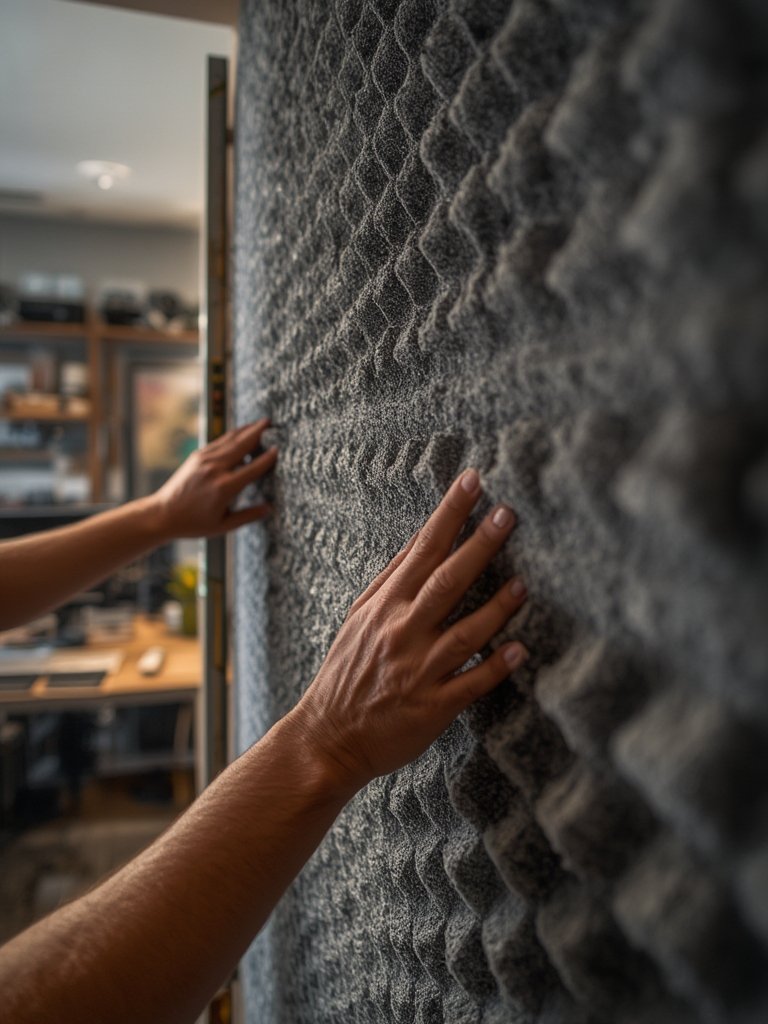
4. Add Acoustic Panels—Select Removable or Hook-and-Loop Options
Stick-on acoustic panels minimize echoes and help with mid-to-high frequency noise. Use adhesive strips or removable hooks, which are perfect for rentals—no drilling required. Cover roughly 20-30% of wall space for best results.
- Estimated cost: $60 to $200 for a set
- Skill level: Intermediate
5. Rearrange and Add Soft Surfaces
Bookshelves—especially those stuffed with books—act as natural sound traps. Place full shelving units on shared walls. Add plush furniture like a reading chair or small sofa, which also improves comfort and organization. For solutions that maximize space, see our space-saving furniture ideas for small apartments.
6. Fill Gaps and Cracks
Check along window frames, outlets, and any venting into the office. Use removable caulk, temporary foam, or reusable putty to seal gaps without permanent alteration (renters: don’t skip this step—it’s low risk but high impact).
7. Consider White Noise or Noise Cancelling Tech
If structural upgrades fall short, a simple white noise machine, or even a smart speaker playing natural sounds, can mask low-level distractions. For work involving frequent calls, noise-cancelling headsets provide personal quiet regardless of room conditions.
If you’re transforming a guest room or nook, multipurpose solutions—like under-desk sound blockers or all-in-one wall panels—offer both sound control and extra storage. For even more home upgrades, check our expert manual on hidden home storage solutions.
Advanced Analysis & Common Pitfalls
While soundproofing a home office is usually straightforward, there are realistic problems to expect—and not all products deliver equal results. Here’s what research and real-world experience reveal.
Overestimated Claims and Disappointing Results
Most soundproofing products (like stick-on panels or door seals) overpromise in marketing. In reality, while they help, none will deliver total silence—especially for loud neighbors or shared-wall apartments. Set realistic expectations for decibel reduction, which is usually modest for “non-construction” upgrades.
Common Pitfalls
- Poor installation: Even small gaps or loosely stuck panels drastically reduce effectiveness.
- Ignoring the biggest leaks: Doors and windows account for the majority of sound transfer—fix these first before spending on extra panels or gadgets.
- Misaligning budget with goals: It’s easy to overspend on large panel sets or noise-cancelling gadgets when a simple fix would suffice. Check reviews and ensure a product’s return window is valid.
- Rental restrictions: Avoid nailing or glueing anything permanently to walls or doors. Choose removable, non-damaging solutions for flexibility and deposit protection.
- Not layering solutions: No single fix will do it all. Combining seals, curtains, soft furnishings, and panels yields dramatically better results.
Comparison: Door Seals vs. Acoustic Panels vs. Soundproof Curtains
| Product | Decibel Reduction (est.) | Installation Difficulty | Typical Price Range | Best For |
|---|---|---|---|---|
| Door sweep & weatherstripping | 5-8 dB | Easy | $12-$50 | First line of defense, all spaces |
| Acoustic wall panels | 5-12 dB (mainly reducing echo, not blocking external noise) | Medium | $60-$200/set | Improving call clarity, minimizing room echo |
| Soundproof curtains | 5-15 dB | Easy | $30-$120/window | Window and exterior wall noise |
What’s Missing in Most Home Office Soundproofing Coverage?
Many guides ignore non-permanent fixes for renters, such as hook-and-loop acoustic panels or temporary gap fillers. Few address layering multiple simple tools for better results. For those maximizing small or shared homes, you’ll also want to combine soundproofing with intentional room separation and cozy home layouts for both privacy and comfort.
Reality Check: Decibels and Expectations
Quick home upgrades rarely result in utter silence—a 10 dB reduction is considered a solid success for simple, commercial solutions. Measure before-and-after noise levels (use a smartphone decibel meter app), so you know which investments made a real impact. For broader context on remote work noise and productivity, see Gallup’s workplace studies and Owl Labs’ State of Hybrid Work 2024.
Conclusion
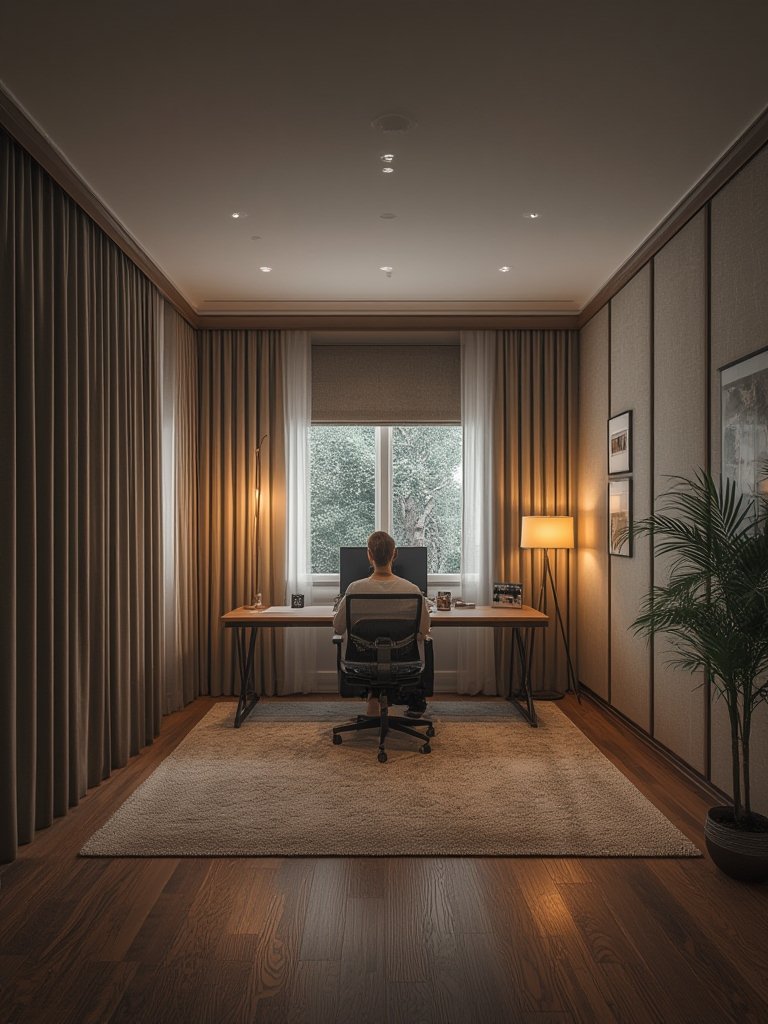
Anyone can improve the comfort and professionalism of their workspace with a little effort and the right materials. While total silence isn’t realistic, layering affordable soundproofing approaches—starting with gaps, then adding rugs, curtains, and panels—brings big returns for both focus and video call confidence. Remember, soundproofing home office spaces doesn’t require permanent alterations or a hefty budget. Start with a simple step today, and share your results or questions below. Ready to create your quiet zone? Try one tip this week for instant results.
Frequently Asked Questions
Can I soundproof a home office if I’m renting?
Yes. Focus on non-permanent solutions: door sweeps, weatherstripping, draft blockers, soundproof curtains, rugs, and stick-on or hook-and-loop acoustic panels. These options require little to no drilling and can be removed without damage when you move out.
How much does it cost to soundproof a small home office?
Most effective starter solutions (door seals, one heavy rug, curtains, and basic panels) cost $120 to $350 total. You can spend less by prioritizing one element at a time. Upgrades like noise-cancelling headsets or custom panels increase price but can often be reused in future spaces.
Will soundproofing materials completely eliminate all noise?
No. Commercial, non-construction solutions mostly reduce—not eliminate—noise. Expect noticeable improvement for conversation-level sounds and sudden distractions, but some outside noise (heavy traffic, construction) may still be audible. For best outcomes, combine several solutions.
What is the fastest way to soundproof a home office for a Zoom call?
Seal your door with a draft stopper or towel, close windows, and use a white noise machine immediately. Hang a heavy blanket or rug on the wall briefly for bonus echo reduction. These tricks take under 10 minutes and require no special tools.
Does soundproofing also improve energy efficiency?
Yes—in many cases. Adding curtains, window insulation, or sealing drafts not only dampens noise but helps maintain room temperature. For comprehensive solutions, see our energy efficient window replacement guide.