



Fluted tile backsplash has emerged as one of the most sought-after kitchen and bathroom upgrades, offering striking texture and subtle dimension without overpowering a space. With its sculptural ridges and modern profile, this trend is climbing the design charts for 2026. However, while the look is sophisticated, there are important details, pros, and potential issues every homeowner or designer should understand before installing fluted tiles in kitchens or baths.
Key Takeaways
- The fluted tile backsplash trend leads 2026 for creating bold, architectural texture in kitchens and baths—but professional installation technique matters for a crisp result.
- Few resources detail maintenance, cost, or installation challenges, so it’s crucial to research proper cleaning and grout management before committing.
- Not all textured tiles handle wear, cleaning, or moisture equally—compare options and understand both the appearance and upkeep involved.
- What Is a Fluted Tile Backsplash and Why Choose It?
- Step-by-Step Guide: Planning and Installing Your Fluted Tile Backsplash
- Advanced Analysis & Common Pitfalls
- Conclusion
- FAQs
What Is a Fluted Tile Backsplash and Why Choose It?
Fluted tiles are dimensional tiles with linear, vertical ridges that produce a ribbed appearance. When used as a backsplash, these tiles create dynamic shadow play and tactile appeal. Designers often use fluted tile backsplashes to add architectural interest and visual depth behind sinks, stoves, or vanity areas.
Unlike traditional flat or patterned backsplashes, fluted tiles catch the light and inject subtle movement into the space. In kitchens, the vertical lines can help elongate walls or accentuate high ceilings. Fluted backsplashes also partner well with emerging 2026 trends such as earth-toned palettes, matte finishes, and full-height tile installations.
Industry forecasts show a strong preference for textured tiles—including fluted and ribbed surfaces—for both bathrooms and kitchens in 2026. According to originalmissiontile.com, these tactile finishes are being used to create interest without heavy patterns. The market now leans toward versatility, durability, and materials that stand up to real-life splashes, moisture, and sun exposure: see industry projections.
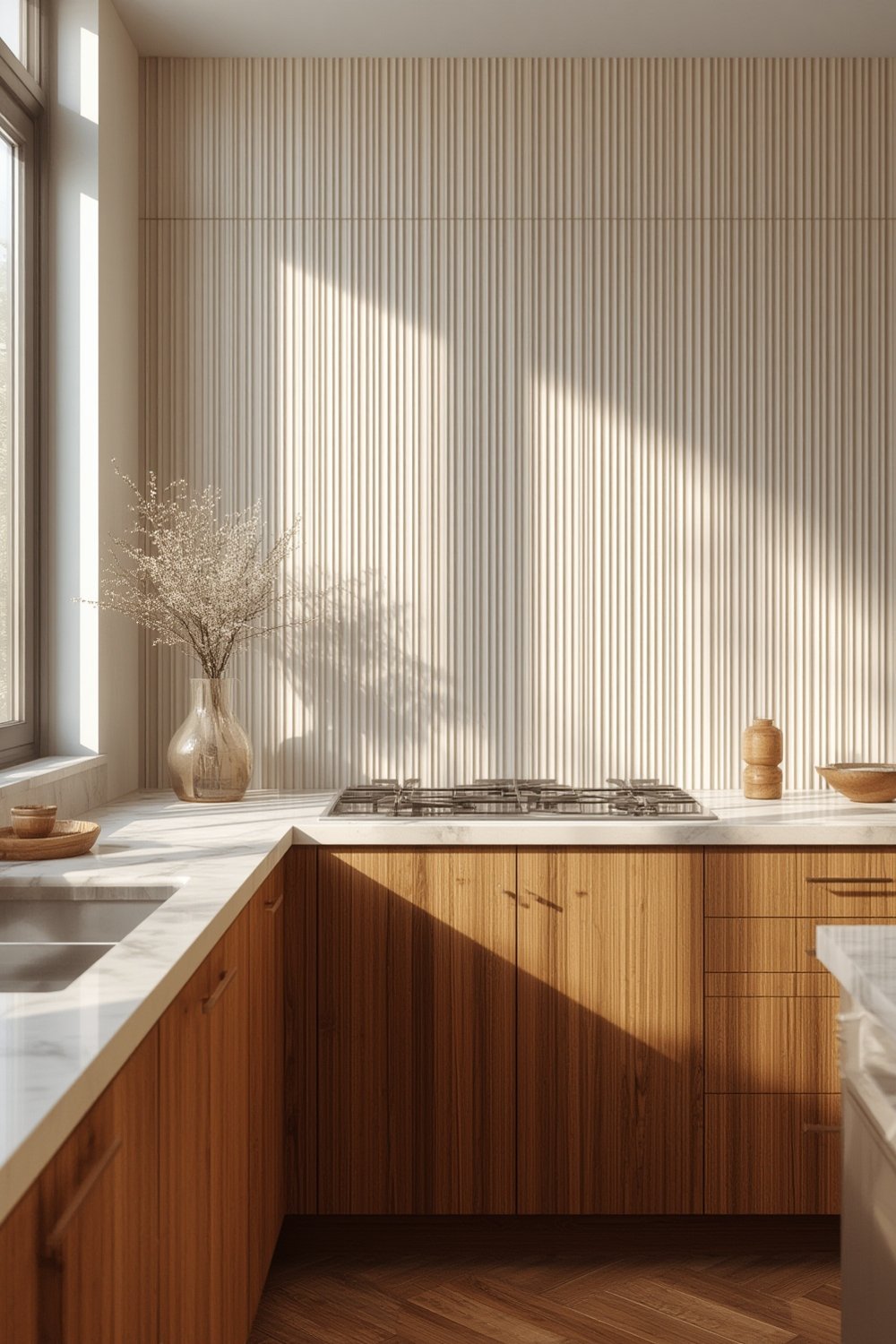
Fluted backsplashes pair well with other natural textures and can be used as statement walls or subtle accents. Pair them with modern farmhouse kitchen ideas for a fresh, textural update, or contrast their vertical lines against simple flooring and counters for a balanced look.
Step-by-Step Guide: Planning and Installing Your Fluted Tile Backsplash
Ready to try a fluted tile backsplash? Follow these practical steps for optimal results.
- Measure and Plan: Carefully measure the area. Decide the orientation of the flutes (vertical is standard for backsplash impact) and map out any outlets or switches.
- Surface Preparation: Start with a smooth, dry, dust-free wall surface. Any bumps will ruin the seamless lines of fluted tile.
- Select Materials: Choose tiles rated for kitchen or bathroom use—porcelain or ceramic are most common. Select a grout color close to the base tile to avoid visual “noise.”
- Gather Installation Tools: Level, notched trowel, tile spacers, thin-set mortar, grout float, and a soft sponge. Three-dimensional tile requires precise leveling for crisp ridges.
- Layout Dry Run: Lay out rows on the counter or floor to test fit and minimize awkward cuts, especially around corners or edges.
- Apply Adhesive and Set Tiles: Spread mortar evenly. Press each tile firmly, keeping flutes aligned and consistent. Use spacers for uniform grout joints.
- Grout and Clean: After tiles set, carefully grout. Don’t overfill flute valleys with grout; a narrow tip applicator helps. Gently wipe excess grout from the surface and within grooves before it cures.
- Seal and Finish: If using natural stone or porous materials, apply a grout and tile sealer for long-term protection.
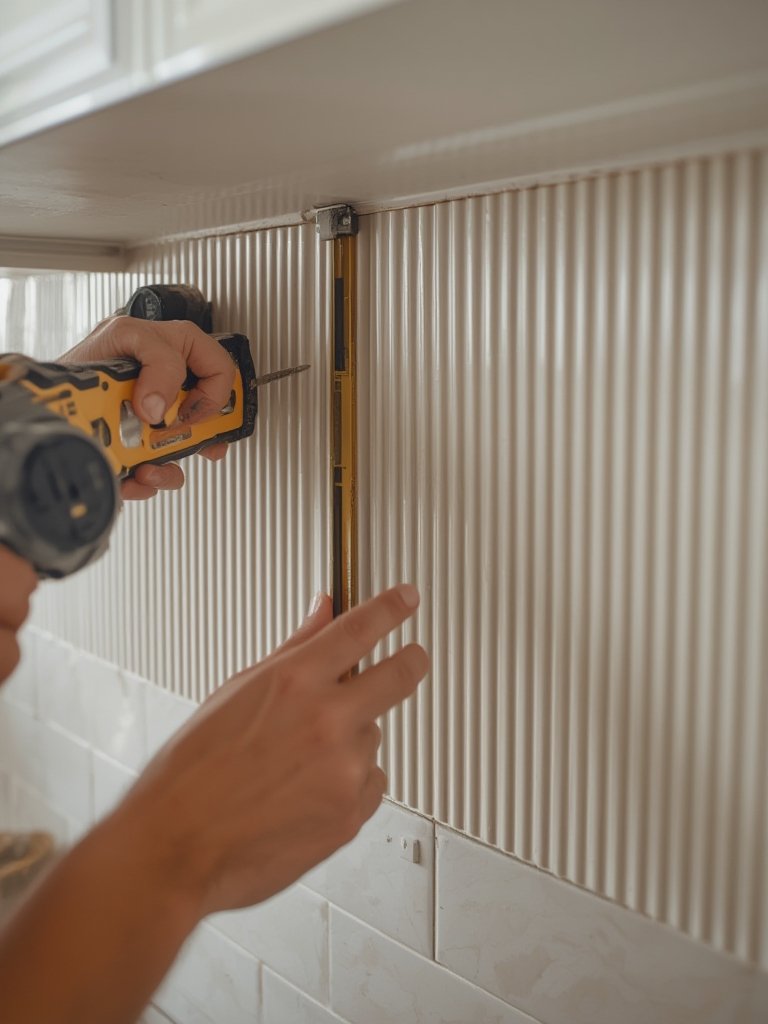
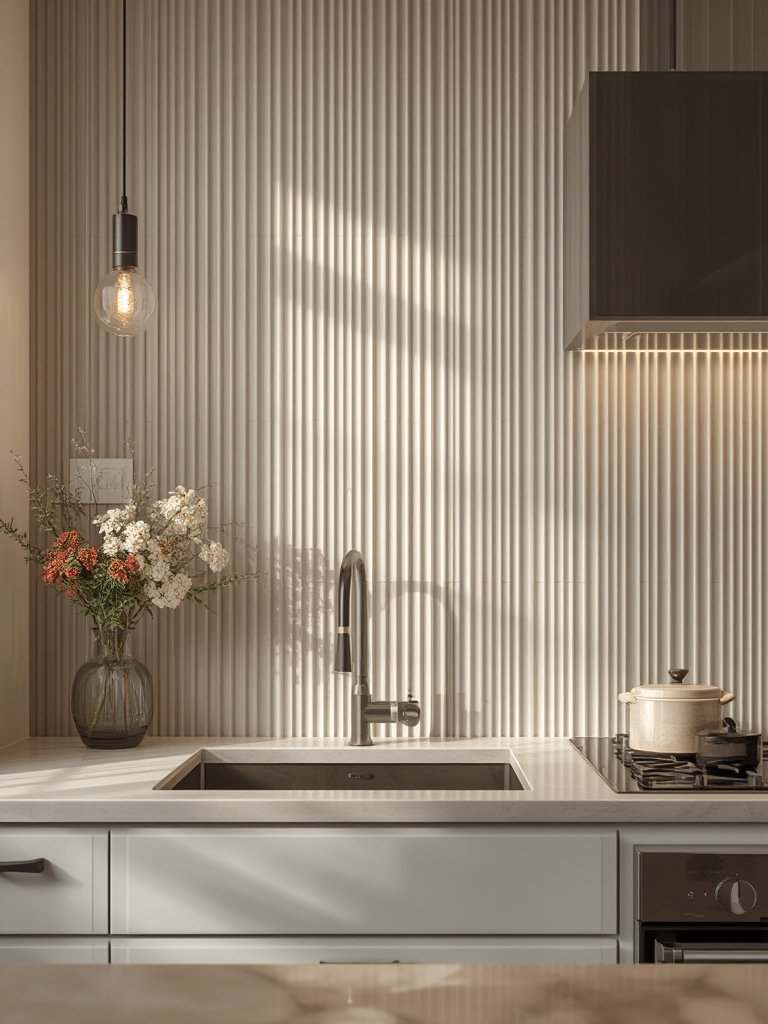
- Consider integrating the backsplash with feature lighting (such as under-cabinet LED strips) to emphasize the 3D effect.
- For inspiration on blending tactile surfaces into compact living, see space-saving furniture ideas for small apartments.
- If you’re new to DIY, hiring a professional ensures perfect alignment on these detail-intensive tiles.
For tight spaces, pairing a dramatic fluted backsplash with cozy neutral color palettes helps the space feel inviting rather than visually cluttered.
Advanced Analysis & Common Pitfalls
While fluted backsplashes are visually arresting, the research highlights three notable gaps in consumer information and real-world application:
Technical and Durability Concerns
There’s currently no quantified data on the scratch resistance, long-term durability, or slip resistance properties of fluted tiles compared to smooth tile in high-traffic and high-moisture zones. For busy kitchens, consider how easily crumbs or oil might settle in the grooves and the additional time required for cleaning.
Installation Challenges
Most resources overlook critical installation differences for three-dimensional tiles. Common pitfalls include:
- Grout filling the valleys and muting the dimensional effect
- Misalignment of vertical lines due to lack of leveling or uneven walls
- Difficulty cutting tiles cleanly around outlets or switches—imprecise cuts stand out on ribbed surfaces
- Insufficient adhesive causing tiles to shift, making ridges look uneven
Maintenance and Cost-of-Ownership
Maintaining fluted backsplashes typically requires more involved cleaning than flat tile, as dust, grime, and splatter collect along the grooves. Failing to seal grout and tile can lead to discoloration, especially in kitchens with frequent cooking.
| Backsplash Type | Durability | Ease of Cleaning | Visual Impact | Typical Cost* |
|---|---|---|---|---|
| Fluted Tile | High (if porcelain/ceramic) | Moderate (grooves may trap grime) | Strong architectural texture | Varies (no 2026 data) |
| Zellige Tile | Medium (handmade/soft finish) | Moderate (irregular surface texture) | Handcrafted, luminous | Generally premium |
| Terrazzo Effect | Very High | High (smooth, sealed) | Playful, speckled pattern | Varies |
| Hand-Painted Tile | Medium | High (if glazed) | Decorative, custom | Premium |
*As of 2026, no reliable published cost-per-sq-ft data for fluted or slim linear tiles.
Matte finishes can help mask water spots and dust, while gloss tiles bounce light in dark spaces and are easier to wipe clean, per trend reports.
Full-height, wall-wrapped installations can create immersive design experiences, resembling those found in warm minimalist living rooms—but every added square foot increases tile and installation costs.
Conclusion
The fluted tile backsplash trend will continue dominating contemporary kitchen and bath design through 2026 thanks to its bold texture and ability to create visual depth. Yet, it’s essential to understand installation precision, increased cleaning needs, and how these features compare to smoother or matte finishes before committing. Research materials, plan your design, and don’t skip steps—an inspired fluted tile backsplash can transform the heart of your home when executed properly. If you’re ready to explore, combine fluted tiles with modern farmhouse details or minimalist color schemes for a high-impact update. Want more tips? Explore our low-maintenance home advice here. For expert guides on pairing plants, décor, or textured finishes, browse our latest style features. Take your next steps confidently—your fluted tile backsplash project starts with smart prep and the right vision!
FAQs
Are fluted tile backsplashes hard to keep clean?
Fluted tiles require more regular wiping than flat tiles due to dirt and splatter collecting in their grooves. Using a sealed, low-porosity tile and regular cleaning with a soft brush or cloth can help keep their sculptural look intact.
What grout color should I use for a fluted tile backsplash?
Choose a grout color that closely matches your tile base. This keeps visual focus on the ridges and avoids busy contrast lines. For a subtle finish, soft neutrals work best.
Can I install fluted backsplash tiles myself?
DIY installation is possible for experienced tilers, but three-dimensional tiles amplify imperfections in alignment and spacing. If you’re new to tiling, hiring a contractor helps ensure crisp lines and trouble-free results.
How do fluted tiles compare to other trendy backsplash materials?
Compared to Zellige or terrazzo, fluted tiles offer bolder shadow effects and linear patterns. They can require more frequent cleaning but deliver a strong architectural statement that’s hard to achieve with smooth options.
Is a fluted tile backsplash suitable for bathrooms?
Yes, provided the tiles are rated for wet environments. Fluted tiles create texture in shower niches or vanity splash zones—just make sure to seal well and wipe grooves dry to prevent mold buildup.